FRAUD INVESTIGATIONS
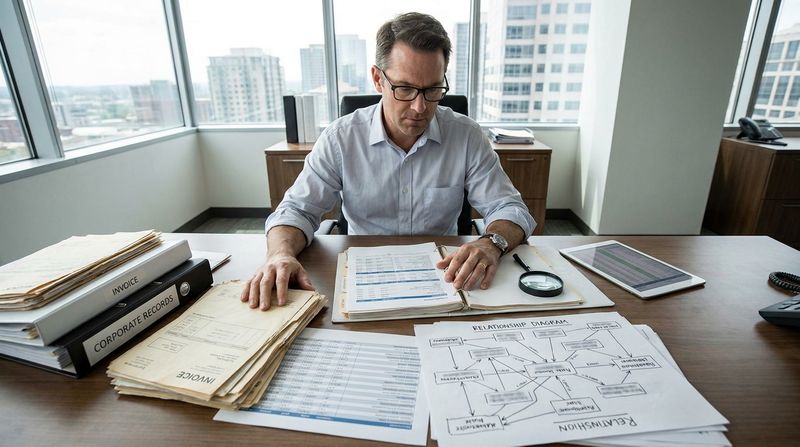
Fraud Investigations and Documented Fact Development
Fraud allegations can involve false statements, concealed relationships, manipulated records, staged events, misuse of funds, identity issues, or transactions designed to hide what actually occurred. We conduct neutral, lawful investigations for attorneys, insurers, businesses, government entities, and other authorized clients.
How We Help
- Allegation and loss analysis: Define the suspected scheme, relevant dates, people, entities, transactions, claimed loss, and factual questions that can be investigated.
- Records and relationship research: Develop corporate ownership, addresses, property, court history, professional licenses, liens, affiliations, and connections among subjects or businesses.
- Witness and participant interviews: Locate and interview employees, customers, vendors, neighbors, former associates, and others with firsthand information.
- Transaction and timeline development: Organize payments, communications, contracts, invoices, movements, and events into a chronology that identifies gaps or conflicting accounts.
- Field investigation and surveillance: Verify locations, business activity, assets visible lawfully, occupancy, claimed operations, and relevant conduct through proportionate fieldwork.
Our Investigative Process
We begin by separating suspicion from verifiable facts. The client provides the known allegations, records, losses, subjects, and objectives. We identify evidence sources, preserve time-sensitive leads, conduct research and interviews, compare information across sources, and report both corroborating and contradictory facts. Complex matters may be handled in phases so the client can evaluate results before authorizing additional work.
Information and Evidence We May Review
- Financial and business material: Contracts, invoices, payment records, correspondence, corporate documents, claim files, applications, and client-provided accounting information.
- Public and legal records: Court cases, liens, judgments, property records, business registrations, licenses, bankruptcies, and other lawful sources.
- Witness and digital sources: Interviews, photographs, video, communications, websites, advertising, and social-media material accessible through lawful means.
- Field observations: Verified addresses, business activity, vehicles, locations, surveillance notes, and photographic documentation.
Reporting and Case Coordination
Reports may include an investigative narrative, subject and entity profiles, transaction or event timelines, relationship charts, interview summaries, photographic exhibits, source indexes, and an explanation of information that could not be confirmed. Significant findings are communicated promptly to counsel or the authorized client.
Who We Assist
Fraud investigations may involve insurance claims, employee or internal misconduct, vendor schemes, mortgage or real-estate transactions, financial exploitation, identity concerns, staged losses, false documentation, business disputes, and litigation allegations.
Professional Boundaries
We investigate facts; we do not decide guilt, make prosecutorial decisions, give legal or accounting opinions, or guarantee recovery of money. We do not obtain bank, tax, credit, medical, or communications records without lawful authority, consent, subpoena, or another proper basis.
Confidential Consultation
Every matter begins with a confidential discussion of the known facts, objectives, location, urgency, and lawful scope. Call 954-615-7382 to discuss an assignment with Investigative Services Unlimited Group.